British Montessori Pre School
British Montessori Pre School in Giddarbaha is dedicated to nurturing young minds through a unique blend of traditional values and modern educational practices. The school offers a child-centric environment that fosters curiosity, creativity, and independent learning. With experienced teachers and a
About British Montessori Pre School
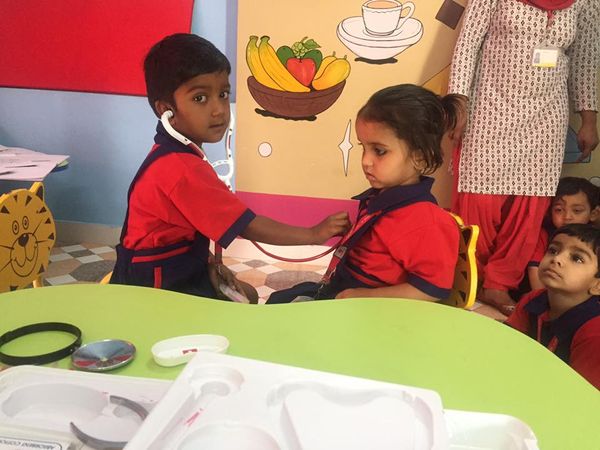
British Montessori Pre School, located in Giddarbaha, stands as a beacon of early childhood education, offering a nurturing environment where young minds can flourish. The school follows the Montessori method, a globally recognized educational approach that emphasizes child-centered learning and fosters independence, creativity, and critical thinking. This method is designed to allow children to learn at their own pace, with teachers serving as guides rather than traditional instructors. The Montessori philosophy is deeply rooted in the belief that children are naturally curious and capable of absorbing knowledge through exploration and play. At British Montessori Pre School, this philosophy is implemented in every aspect of the curriculum, creating a space where children feel empowered to learn and grow.
The school's environment is meticulously prepared to encourage independent learning. Classrooms are equipped with a wide range of Montessori materials, carefully designed to be both educational and engaging. These materials are presented to children in a way that allows them to explore concepts such as language, mathematics, sensory development, and practical life skills. Each activity is hands-on and encourages problem-solving, concentration, and creativity. The open-ended nature of the materials ensures that children can explore concepts at their own pace, making learning a deeply personal experience. This individualized approach not only fosters academic growth but also helps children develop confidence and a love for learning.
British Montessori Pre School places a strong emphasis on the development of practical life skills, which are integral to the Montessori philosophy. From an early age, children are encouraged to engage in activities that help them develop coordination, independence, and responsibility. These activities include tasks such as pouring, cleaning, dressing, and organizing, which may seem simple but are crucial in helping children develop fine motor skills and a sense of self-reliance. The ability to perform these tasks independently fosters a sense of accomplishment and self-confidence, which is vital for a child’s overall development.
Language development is another cornerstone of the curriculum at British Montessori Pre School. The school provides a language-rich environment where children are encouraged to express themselves, engage in conversations, and develop strong communication skills. Through storytelling, reading, and interactive language activities, children are introduced to a wide range of vocabulary and grammar concepts. The school also places a strong emphasis on phonetics, helping children develop the foundational skills necessary for reading and writing. By encouraging language development in a natural and engaging way, British Montessori Pre School ensures that children build strong communication skills that will serve them throughout their lives.
Mathematics is introduced in a concrete and tangible way at British Montessori Pre School. Rather than relying solely on abstract concepts, the school uses Montessori materials to help children understand mathematical principles through hands-on activities. These materials allow children to explore concepts such as counting, addition, subtraction, and geometry in a way that makes sense to them. The use of physical objects to represent numbers and quantities helps children grasp mathematical ideas more easily, making learning enjoyable and effective. This approach ensures that children develop a strong mathematical foundation that will support their future academic pursuits.
The Montessori method also places a significant emphasis on sensory development, recognizing that children learn best when they engage all their senses. British Montessori Pre School offers a variety of sensory activities designed to refine children’s ability to observe and categorize the world around them. These activities help children develop their senses of touch, sight, sound, taste, and smell, providing them with a richer understanding of their environment. Sensory activities are not only enjoyable for children but also play a crucial role in their cognitive development, enhancing their ability to concentrate and think critically.
British Montessori Pre School is also committed to fostering social and emotional development. The school creates a warm, supportive environment where children are encouraged to interact with their peers and develop essential social skills such as cooperation, empathy, and conflict resolution. Group activities and collaborative play are integral parts of the daily routine, allowing children to learn how to work together and form meaningful relationships. Teachers at the school are trained to guide children through social interactions, helping them navigate challenges and develop positive behaviors. This emphasis on social and emotional development ensures that children leave the school with not only academic skills but also the interpersonal skills needed to succeed in life.
The outdoor environment at British Montessori Pre School is just as important as the indoor learning spaces. The school provides a safe and stimulating outdoor area where children can engage in physical activities that promote gross motor development and physical fitness. Outdoor play is a vital part of the Montessori approach, as it allows children to explore nature, develop coordination, and engage in unstructured, imaginative play. The outdoor environment is designed to encourage exploration and creativity, providing children with the freedom to move, climb, and discover the world around them. The school recognizes the importance of balancing indoor academic activities with outdoor physical play to support holistic development.
The teachers at British Montessori Pre School are highly trained in the Montessori method and are passionate about early childhood education. They play the role of facilitators, carefully observing each child’s development and providing individualized guidance and support. Rather than imposing strict lessons, teachers create an environment where children are free to choose their activities and follow their interests. This approach allows children to take ownership of their learning, fostering a sense of independence and self-motivation.
Institute Facilities
No courses listed yet.